Confluence of European Water Bodies
The river Mtkvari, sole water body from Georgia among 58 across the Confluence of European Water Bodies, entering a network spanning 18 countries built to rethink political representation for water itself.
- Date
- Format
- Network
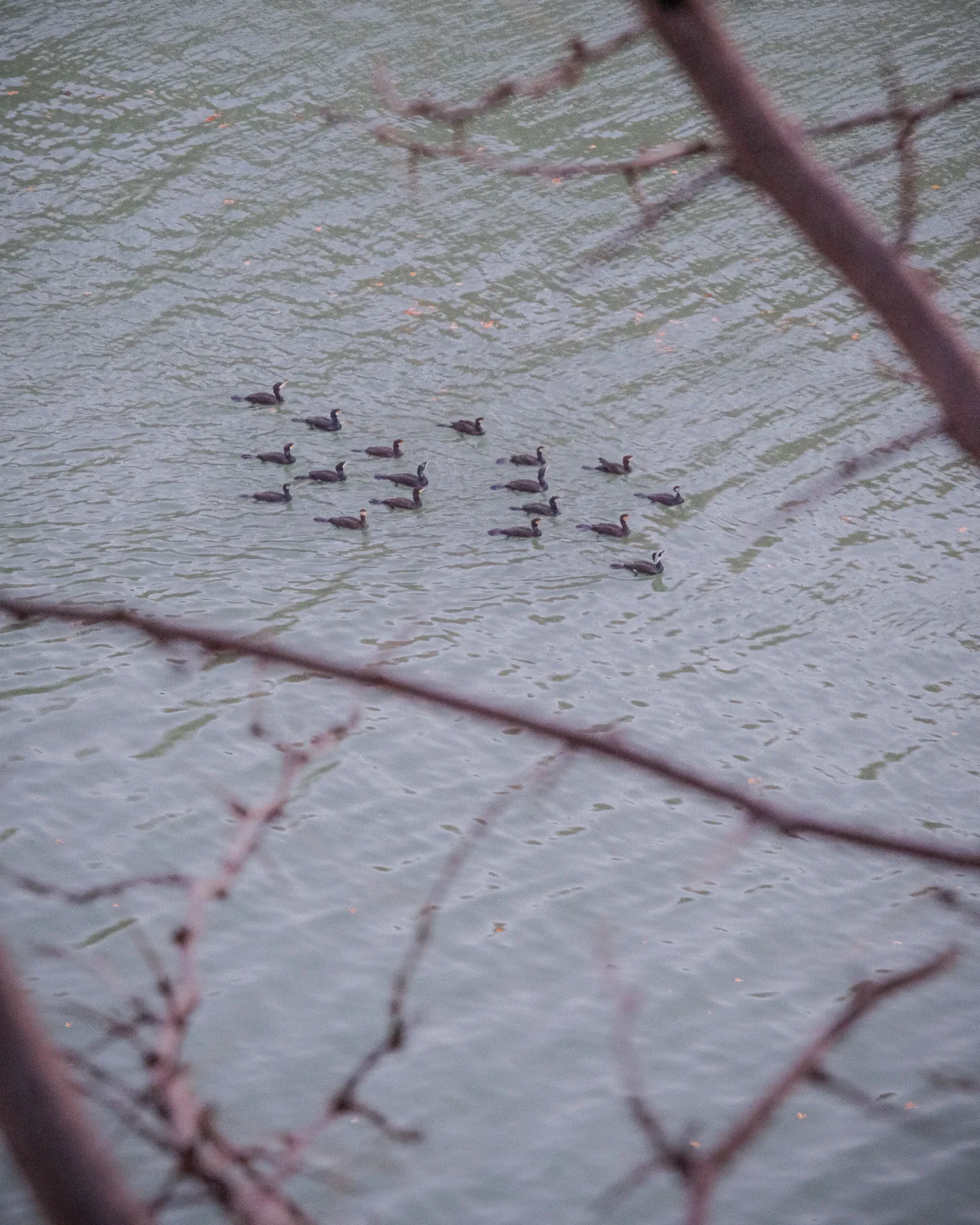
In May 2026, through the wit[h]nessing initiative, the Mtkvari River joined the Confluence of European Water Bodies—a collective of rivers, lakes, lagoons, seas, and glaciers established in 2023 by proclamation before the European Parliament in Brussels. The Confluence arose from the recognition that the coexistence between water and humans has fundamentally shifted, urgently requiring formal acknowledgement of ecosystemic rights and political representation rooted in living communities. This multilayered alliance functions simultaneously as an action platform, a mutual support network, and a transdisciplinary research group.
Among 58 water bodies across 18 countries, the Mtkvari is the sole representative from Georgia. Stretching over 1,515 kilometres, the river is the vital lifeline of the South Caucasus. Together with its basin, totalling over one million hectares, the Mtkvari forms the region’s largest freshwater habitat, sustaining a community of both human and more-than-human life, including rare and ancient species. For millions of years, Caucasian salamanders have evolved within the basin’s wetlands and tributaries. Unique endemics have found harbours within its shifting currents, including the primordial sturgeon—an ancient group of fish dating back over 200 million years. In the lowland forests, imperial eagles nest, while the goitered gazelle, on the verge of extinction, finds shelter near the river’s mouth in Azerbaijan. Yet, of all these species, it is humans who depend most deeply upon the basin: home to around 16 million people. Human bodies are quite literally woven from the river’s flow, which holds roughly 80% of the region’s freshwater and supports about 70% of its industrial and agricultural potential.
Today, the river’s ecological state is profoundly critical. Soviet functionalist planning and post-Soviet extractivism have confined the river within concrete walls, reducing it to a utilitarian object. Unchecked sand and gravel extraction for transnational trade corridors alters riverbed morphology and destroys benthic habitats, while in urban areas—most notably Tbilisi—concrete embankments have severed the river from its natural floodplains, leaving only fragmented survival islands for remaining biodiversity. Against this backdrop, chaotic and uncoordinated dam construction across local and regional levels poses an existential threat to the basin’s ecosystems and regional water security. Climate change acts as a force multiplier, compounding these damages through rising temperatures and severe water scarcity.
Joining the Confluence of European Water Bodies does not offer simplistic shortcuts through this complex web of crises, yet it firmly situates the Mtkvari and its traumatised being within the global crisis around water and its ecosystems, while igniting wider discussion about the river’s social, cultural, and political agency.
In September, at the Spree Confluence 2026 in Berlin, the Mtkvari delegation gathered with the 58 water bodies from 18 countries—artists, scientists, Indigenous representatives, lawyers, political actors, and civil society initiatives—to rethink how Europe lives with, decides about, and cares for water.
The Spree Confluence 2026 is curated by Symbiotic lab: Léon Gross & Jakob Kukula.