Tbilisi is often celebrated as a city of endless discoveries, yet these discoveries tend to centre around human culture: much has been thought, written, and narrated about the city’s history and myths, its architecture and urban planning, its neighbourhoods and social fabric. These stories rarely venture beyond a human-centred perspective, failing to fully explore the intrinsic nature of the city’s non-human inhabitants: those who, alongside humans, shape its identity, memory, and history.
Trees are vital beings that animate the city’s structure and sustain life. Yet these sensing beings are often erased from urban imaginaries. This lack of imagination reverberates in our everyday rituals and in the structures and methods of governance. As a result, the destruction of trees and forests in the name of aggressive urban development has become a troubling routine in Tbilisi—erasing not only the histories and public imaginaries captured by these arboreal beings, but also the crucial relationships nurtured across centuries between trees and other human and non-human beings.
Trees: Alternative View on Tbilisi aims to subvert the perspective that disregards these oldest inhabitants, and to explore an alternative view of the city as an intertwined entity: one where trees, through hidden and perceptible threads, connect to other living bodies, nourishing, harboring, and cradling them, shaping their streams of life.
What the project follows
- Historical trees, which represent Tbilisi’s cultural-ecological archive.
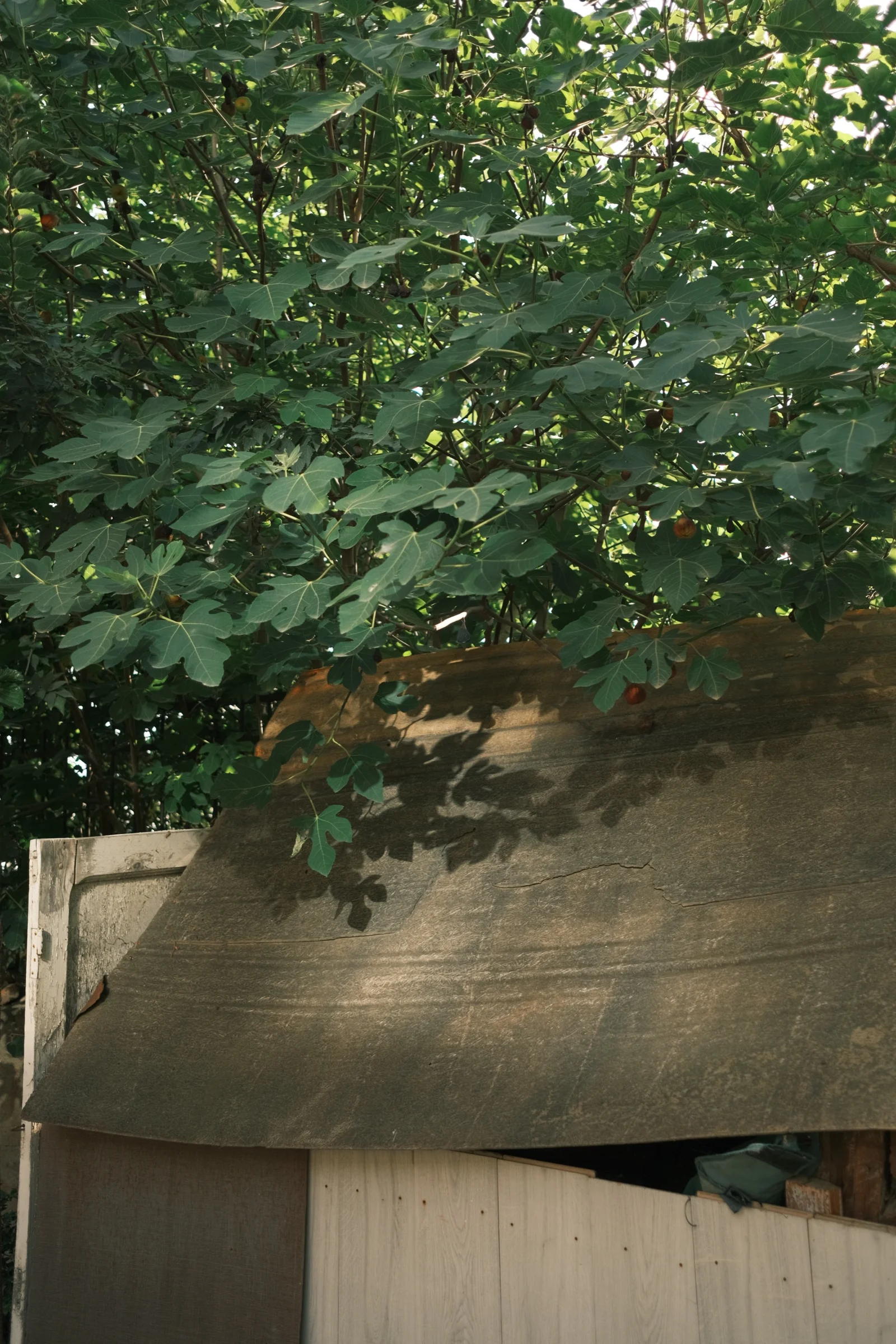
- Fruit-bearing trees and their material and social significance.
- Feral trees, which seem to have slipped beyond human control, taking root in urban crevices.
- Trees integrated into architecture and their symbiotic existence within urban space.
- Tree roots erupting through the homogenous surface of the city’s sidewalks—writing over asphalt, resisting taming, and questioning the role of nature as a stable surface upon which culture inscribes itself.
- Trees inhabiting Tbilisi’s courtyards, which often serve as centres of social interaction, connecting the lives of neighbouring people to one another.