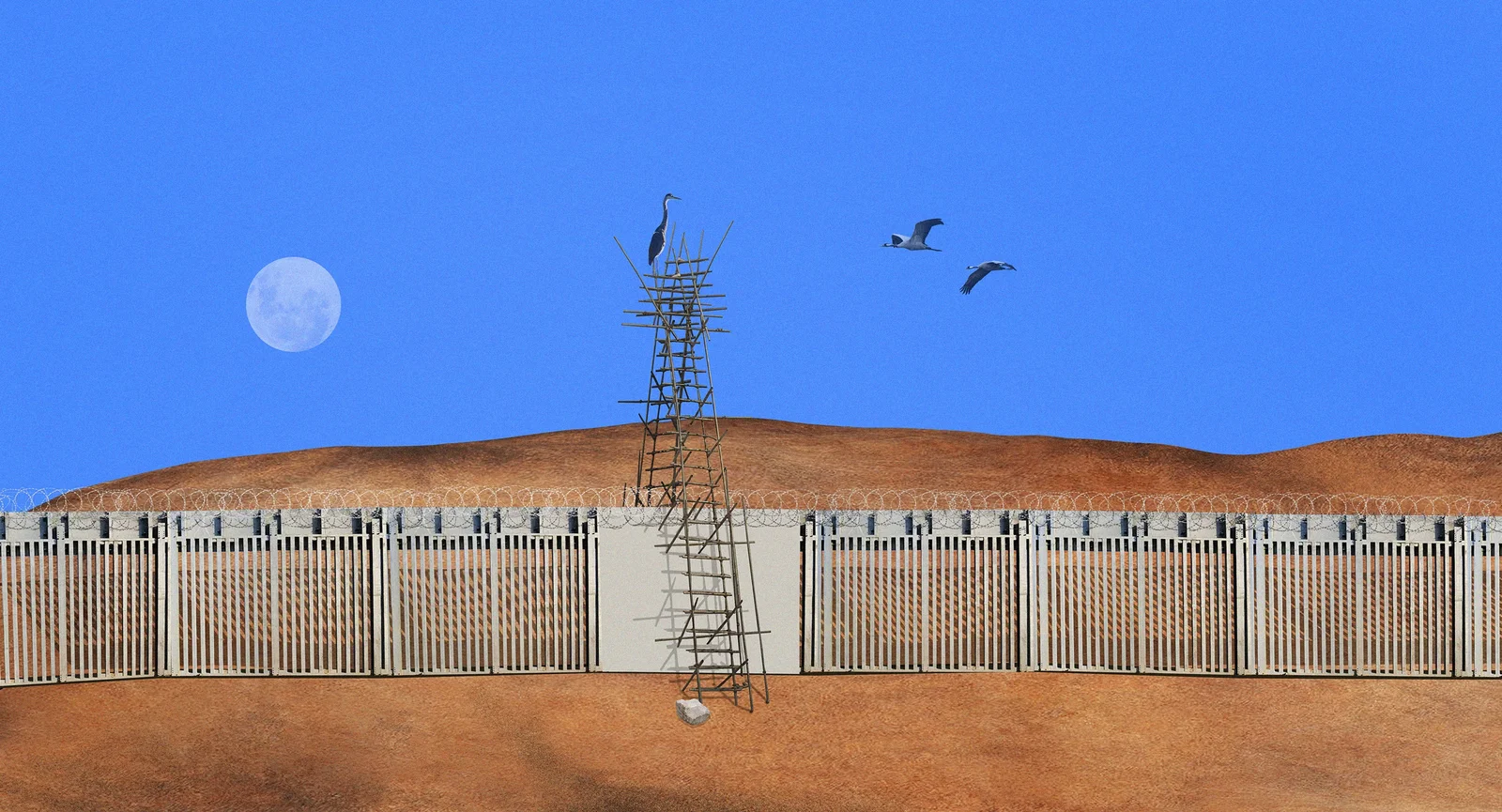
As part of an invitation from the Lisbon Architecture Triennale and DAI-SAI, wit[h]nessing embarked on a challenging on-land journey spanning approximately 7,100 kilometres from Tbilisi to Lisbon, traversing the expanse between the eastern and western extremities of trans-European territory. Over the course of 22 days, we crossed the borders of 10 countries, spending nights in 12 different cities.
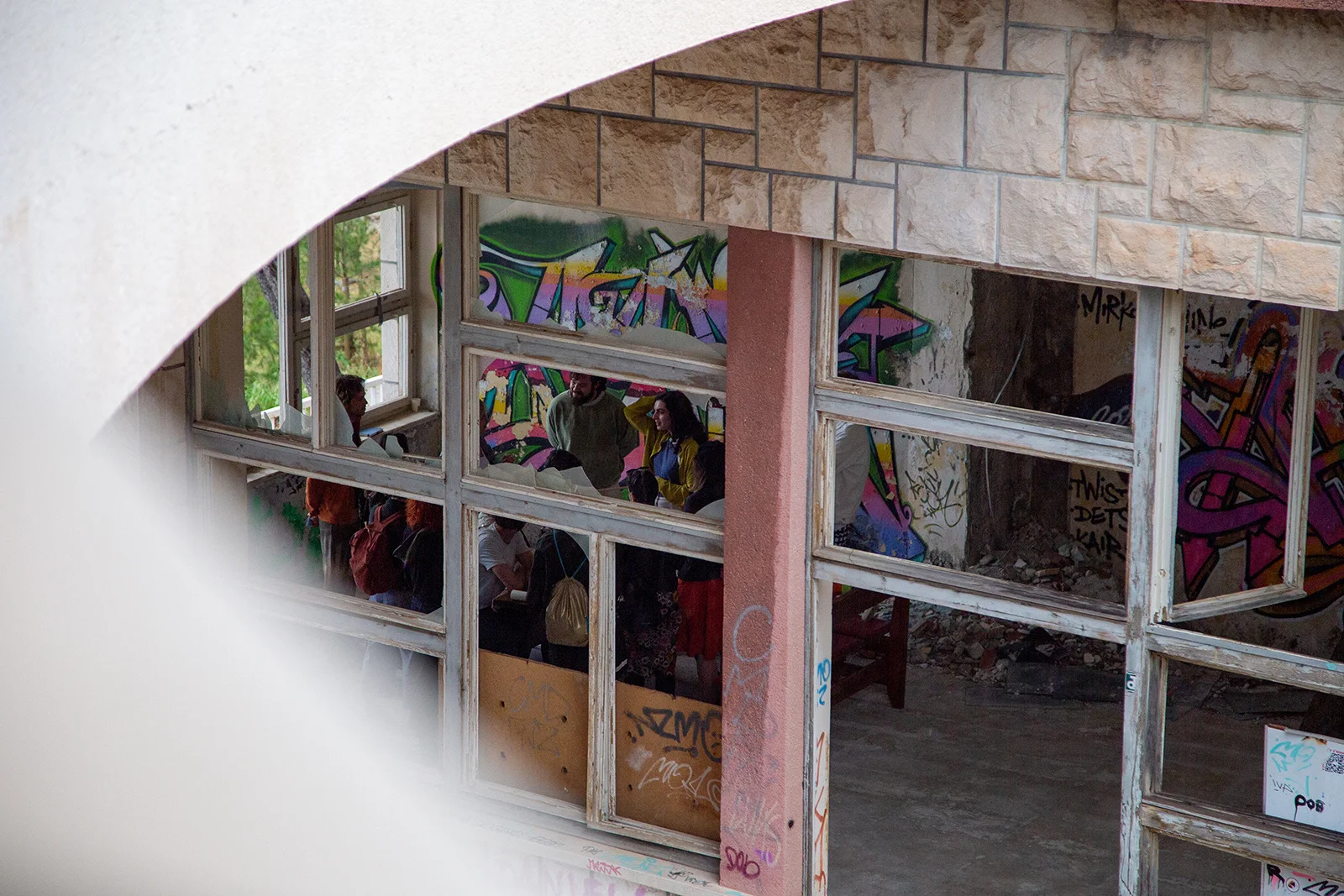
Following the unconscious threads of our thoughts, we presented twelve speculative stories inspired by a tapestry of twelve cities that marked our journey, as well as the intermediate spaces between them: Tbilisi, Istanbul, Thessaloniki, Tirana, Krvavica, Rijeka, Venice, Marseille, Barcelona, Seville, Faro and Lisbon.
We hope that these stories create a space for dialogue between those of us who are local to some territories and those who are foreigners to others, filling in gaps with new manifestations of knowledge, imagination, and speculation. They hold onto the slightest chance that the strict borders between different entities we belong to—both actual and ontological—might become thresholds for new imaginings, conceptions, and relations.
Speculative fabulation, inspired by Donna Haraway’s proposition, serves as a tool for disrupting perception and habitual ways of knowing by amplifying alternative and virtual potentials within any given condition. While speculation might extend far beyond already-actualised realities, it has the power to communicate something yet unthought, non-actualised, or non-actualisable. It acknowledges the impossibility of fully understanding the complex intricacies of each culture, territory, and language—playing instead with the limited spatial and temporal circumstances of the travelling experience. By questioning our position as foreign observers, yielding to intuition, and entering the humble dimension of wit(h)nessing, we attempted to explore alternative modes of human subjectivity, relation towards the world, and coexistence.
While this investigation acknowledges accelerated globalisation and international (im)mobility, as well as increasing debates about geopolitics, national identity, migration, and border control, it does not aim to provide a comprehensive analysis of these issues. Nor does it delve into the ‘politics of exhaustion’—a border governance method designed to deter, exclude, and control through the mental and physical exhaustion of individuals. Neither does it offer concrete solutions based on the ethics of cure. Instead, as travellers, we chose to immerse ourselves in restricted yet unfamiliar places, rich with both sources of exhaustion and healing, and to make sense of experienced affects through imagination, speculation, and storytelling.
The rapid pace of our movement and the predetermined paths we followed significantly influenced the nature of our investigation. Not that we truly “investigated” the multilayered contexts along the way, but rather caught glimpses of various urban and rural environments serving as pathways for migrants, tourists, and travellers. These places are exhausted by the gaze of millions on the move or by those veering off this trajectory, such as in cases of illegal migration. These exhausting setups have, in turn, shaped us—still feeling the waves of exhaustion hitting our bodies while finding healing in the numerous encounters we had.
Activations
The chapters of this enquiry, in the order they happened.
Texts
- Planet Krvavica Contribution
- Between Exhaustion and Cure Publication