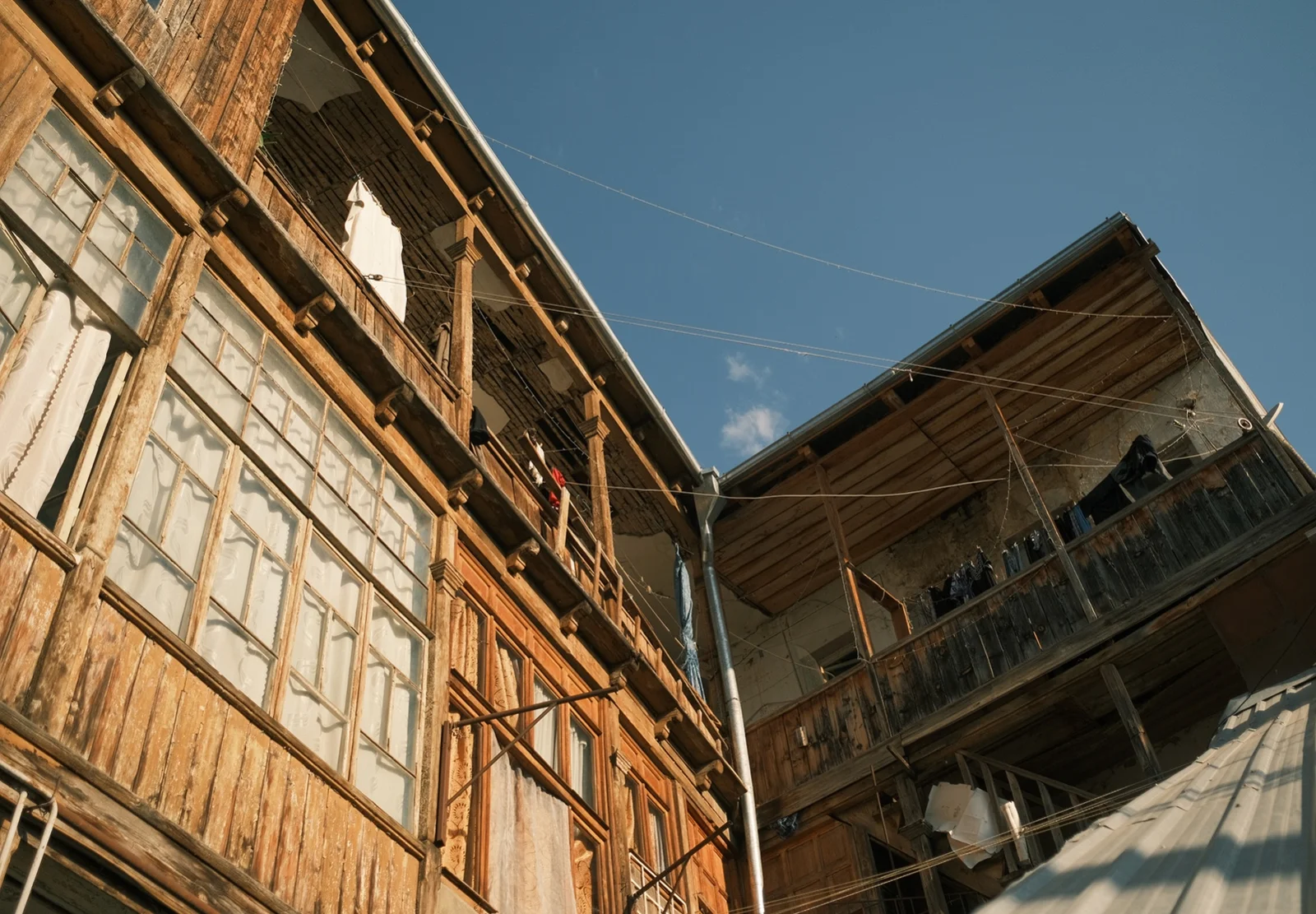
This research project offers a critical re-examination of urban typology through a case study of the Mtatsminda district in Tbilisi and its historical residential buildings with shared courtyards. Moving beyond conventional architectural classification, the project investigates typologies of habitation and urban process, defined as the recurring patterns of interaction, negotiation, and adaptation that shape the built environment.
Framed by Actor-Network Theory and assemblage thinking, Mtatsminda is analysed as a dynamic system where formal typologies are constantly being produced and redefined by informal, emergent ones—patterns of social use, ad-hoc modifications, and socio-economic bargains. This perspective adopts a flatter ontology, acknowledging the agency and vibrancy of materials, objects, and other more-than-human entities by treating them as active participants in the assemblage, and dismantling the hierarchies between human and non-human, man-made and natural.
Then, now, next
The research traces the evolution of these typologies across three registers. The past is explored through urban archaeology that identifies historical typologies of development and habitation. The present is analysed via visual architectural research together with ethnographic fieldwork, documenting the contemporary typologies of practice that coexist with, and often challenge, official planning. The next uses speculative methods—design and prototyping—to develop new typologies not as fixed end-products, but as adaptive systems, symbioses, or resilient additions.
Participatory interventions under development include story-mapping workshops with long-term residents to chart memories and informal uses of space; temporary prototypes in public space to test potential changes and gather feedback; and a digital archive where community members can contribute their own photographs, stories and ideas for Mtatsminda’s future.
One thread the research follows is the Gabanaantkhevi, a seasonal right-bank tributary of the Mtkvari that rises on the north-eastern slope of Mount Mtatsminda and now runs entirely underground, in a tunnel beneath Makashvili and Kakabadze streets, crossing Rustaveli Avenue near the monument before rejoining the Mtkvari. What if the river were uncovered? What path would it take? How would it change the social dynamics, property values, and ecology of the streets above it?
Activations
The chapters of this enquiry, in the order they happened.
-
Workshop
Reclaiming Imagination of the City
Design Institute · Tbilisi, Georgia
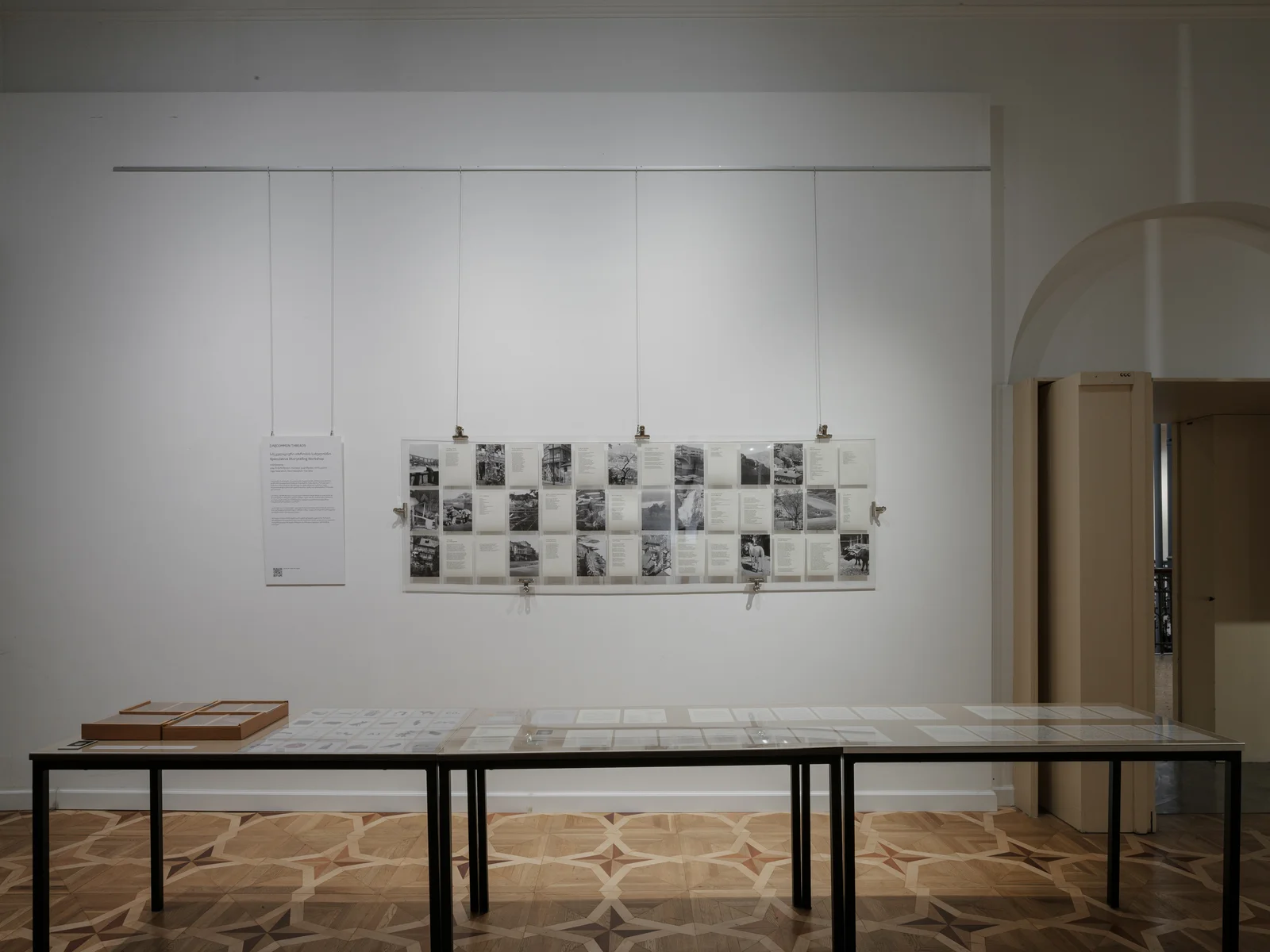
An iteration of [UN]COMMON THREADS on the future of Tbilisi, in which participants wrote as local communities, heritage professionals, planners and developers, or the city’s nonhuman citizens.
![A participant writing in Georgian on a printed [UN]COMMON THREADS worksheet.](https://withnessing.org/wp-content/uploads/2026/08/reclaiming-imagination-workshop.webp)
-
Exhibition
EZOLOGIA — Porous Body of Tbilisi
Karvasla — Tbilisi History Museum · Tbilisi, Georgia
An exhibition asking how the typology of the Tbilisian Courtyard shapes the city’s urban fabric—analytical maps, archival documents, photo essays and film, alongside our installation on reclaiming the imagination of the city.